ISMMS 1 · 1998
Baltimore
United States
When: 10–12 July 1998
Where: Hyatt Regency Hotel, Baltimore, Maryland
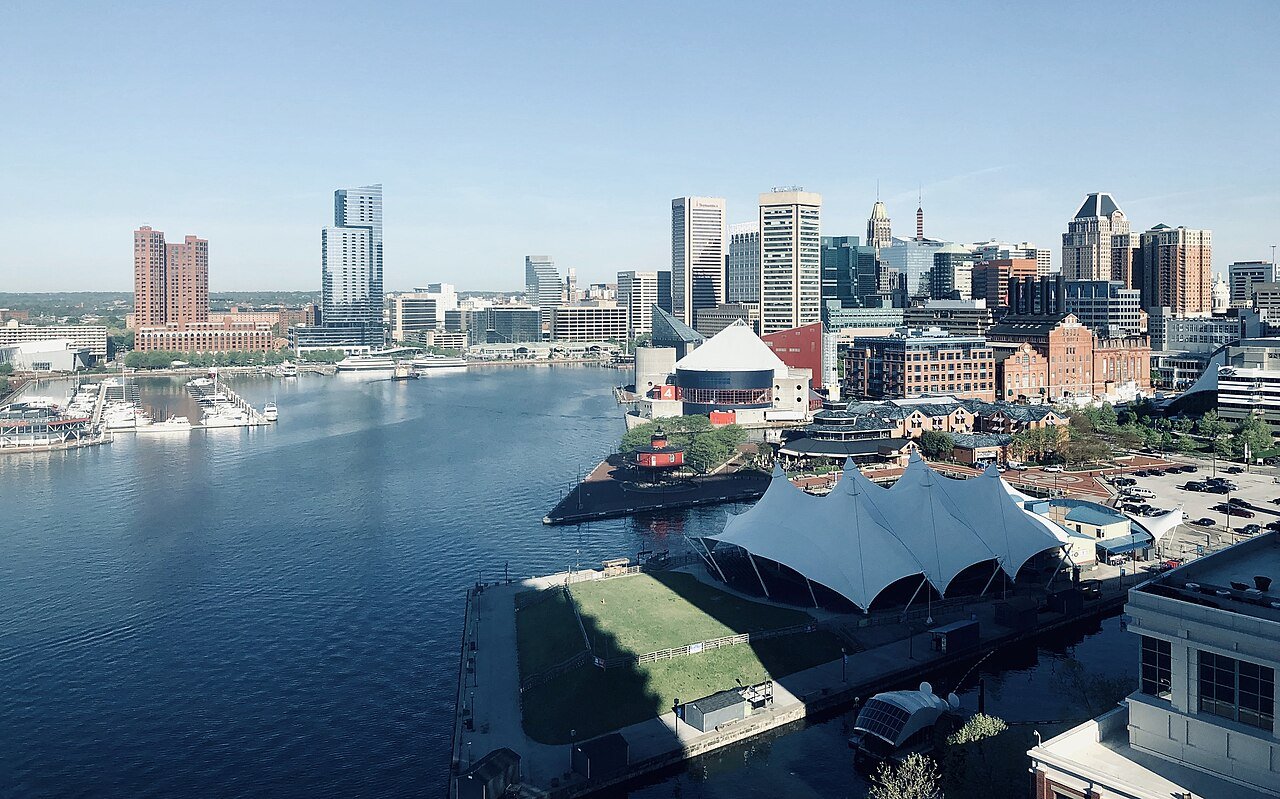
Inner Harbor · Chris6d · CC BY-SA 4.0. Resized; displayed crop.

Conference at a glance
71
Contributions: talks and posters
MEETING HIGHLIGHTS
Where the series began
The inaugural International Symposium on Mesoporous Molecular Sieves (ISMMS) established a dedicated forum for the rapidly growing field. Held immediately after the 12th International Zeolite Conference, it brought together 71 invited, oral and poster contributions. The proceedings, Mesoporous Molecular Sieves 1998, captured early advances in the synthesis, characterization and applications of these emerging materials.
Program & speakers
The First International Symposium on Mesoporous Molecular Sieves met at Baltimore’s Hyatt Regency Hotel on 10–12 July 1998, following the 12th International Zeolite Conference. Shinichi Nakata’s contemporary participant report records 71 contributions across invited lectures, oral presentations and posters. The papers were published in Studies in Surface Science and Catalysis, Volume 117; most addressed fundamental questions of synthesis and structure.
Named presentations
- J. S. Beck — Potential Applications for M41S Type MMS
- Shinji Inagaki
Research themes
Research connected inorganic synthesis with interfacial and colloid chemistry. Mobil’s M41S family, including MCM-41, and the FSM-16 series provided important foundations, alongside emerging SBA, HMS, KIT and MSU materials, mesostructured metal oxides, inorganic–organic hybrids and aluminophosphate systems.
Applications discussions considered catalysis and separation alongside practical challenges: thermal, hydrothermal and mechanical stability; control of catalytic active sites; reversible adsorption and desorption; and surfactant cost and biodegradability. The report highlights Takashi Tatsumi and colleagues’ work on water-vapor stability and Seitaro Namba and colleagues’ pore-size control research. Other directions included nonsilica compositions, metal incorporation, long-range order, orientation and surface structure.